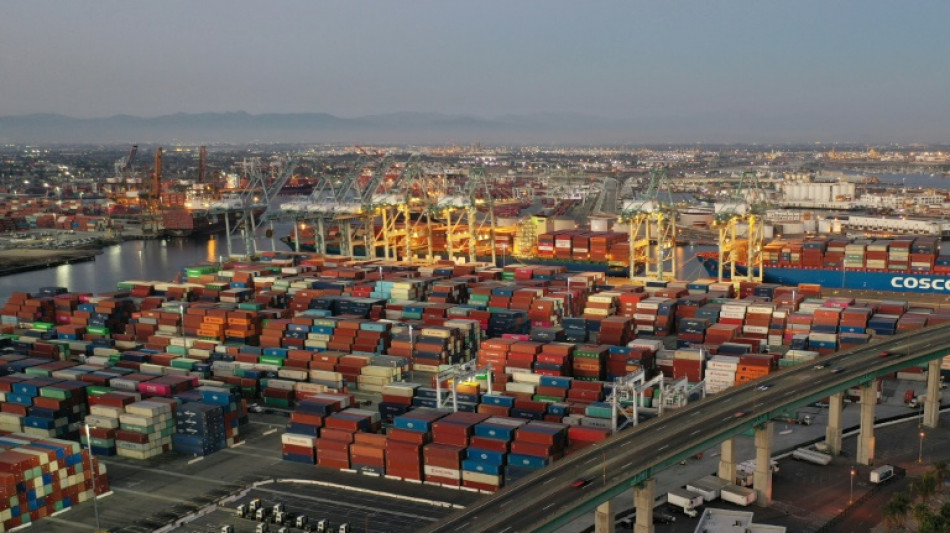
Dockworker shortage shuts California ports / Photo: © AFP/File
Two of the busiest ports in the United States were shuttered Friday because not enough dockworkers turned up for work, a shippers representative said.
The shutdown comes as part of a long-rumbling dispute between shippers and the International Longshore and Warehouse Union (ILWU) focused on pay and the role of automation.
"The largest ILWU local on the West Coast has taken a concerted action to withhold labor at the Ports of Los Angeles and Long Beach, resulting in widespread worker shortages," said a statement from the Pacific Maritime Association, the umbrella group that represents shippers.
"The workers who did show up were released because there was not a full complement of ILWU members to operate the terminals.
"The action by the Union has effectively shut down the Ports of Los Angeles and Long Beach -- the largest gateway for maritime trade in the United States."
The ILWU insisted the only no-shows were those marking the Christian festival of Good Friday.
"Cargo operations are ongoing as longshore workers at the Ports remain on the job," a union statement said.
The two ports -- known as the San Pedro Bay Port Complex -- move around 20 million shipping containers' worth of goods every year, with a value of over $300 billion.
The complex is the ninth biggest port in the world by market share, port figures show, and plays a key role in keeping global supply chains moving.
During the Covid-19 pandemic, ports around the globe gummed up, as shippers struggled to meet demand for stay-at-home goods, a problem that persisted as countries opened up.
Economists said the slow-to-shift backlog was a contributing factor in the inflation that has gripped much of the world in the last 18 months as consumers demand products that aren't arriving fast enough.
J.Klein--BP