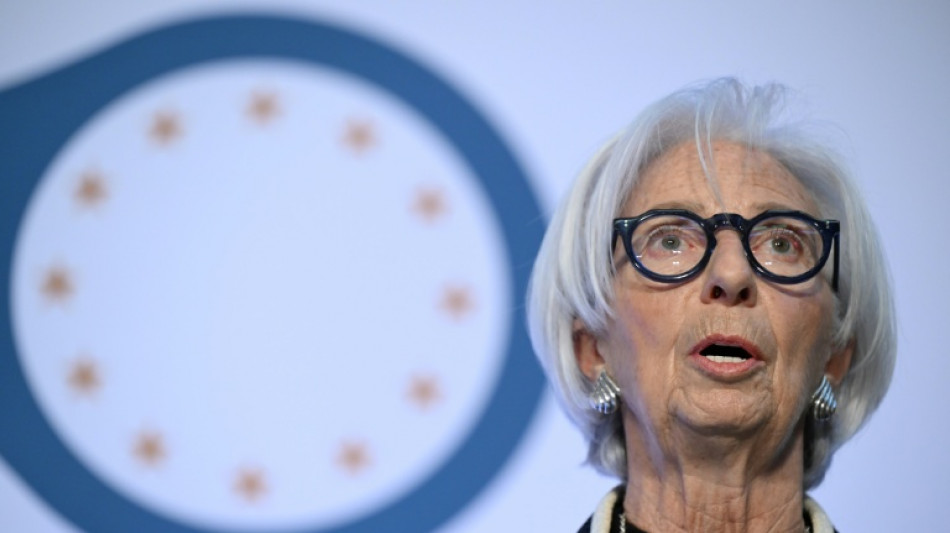
ECB won't be 'paralysed' in face of energy shock: Lagarde / Photo: © AFP
The European Central Bank has several options for dealing with the Middle East war energy shock, its chief Christine Lagarde said Wednesday, vowing policymakers would not be "paralysed by hesitation".
The conflict, which began at the end of February with US-Israeli strikes on Iran, has sent oil and gas prices surging due to the near total closure of the Strait of Hormuz and attacks on Gulf energy targets.
Saying the world was facing "profound uncertainty", Lagarde insisted the ECB was well positioned to deal with the turmoil, with inflation currently close to its two-percent target and the eurozone economy on a sound footing.
"We have a graduated set of options for responding," she said in a speech in Frankfurt, where the ECB has its headquarters.
She stressed that policymakers "will not act before we have sufficient information on the size and persistence of the shock.
"But we will not be paralysed by hesitation: our commitment to delivering two percent inflation over the medium term is unconditional."
At its most recent meeting last week, the ECB kept interest rates on hold as expected, while warning of higher inflation and lower growth due to the war.
But analysts have raised their bets on the central bank hiking borrowing costs as soon as next month in a bid to keep the lid on an expected surge in consumer prices.
Higher global oil and gas costs have led to immediate petrol price hikes in the eurozone, and rekindled memories of the energy shock that followed Russia's 2022 invasion of Ukraine.
At that time, the ECB faced fierce criticism for failing to hike borrowing costs quickly enough to tame runaway price rises.
But Lagarde sought to downplay the similarities with that period.
"The initial shock has so far still been smaller," she said, while adding the backdrop now was more "benign".
When Russia throttled gas supplies to Europe after the start of the Ukraine war, inflation was already higher due to post-pandemic supply chain problems and the economy was facing labour shortages, she said.
Now, the eurozone economy is on a sounder footing and inflation has been around the ECB's target for some time, she stressed.
W.Schneider--BP