Restored Cheshire wetland becomes key UK breeding site for black-necked grebes
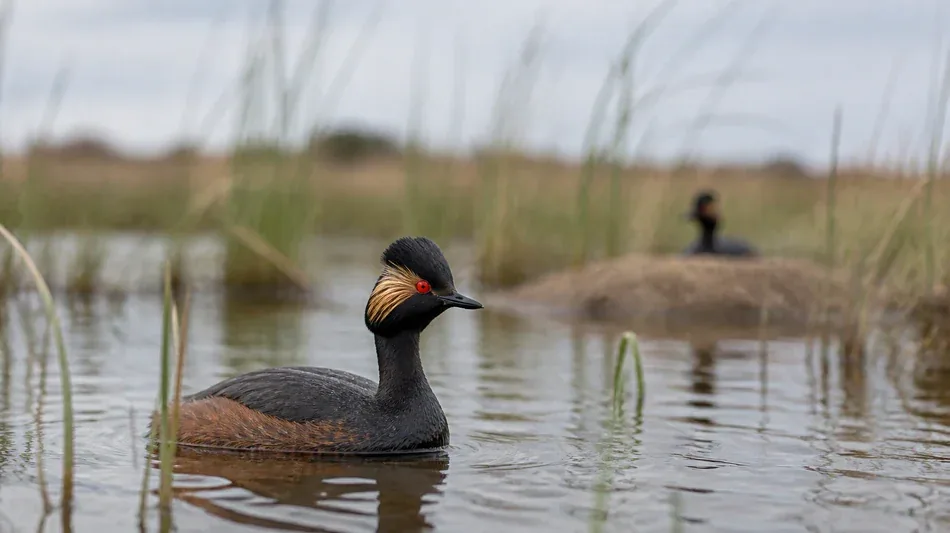
Habitat restoration at Woolston Eyes in Warrington has turned former canal-dredging lagoons into Britain's strongest breeding site for the rare black-necked grebe.
Woolston Eyes in Warrington, Cheshire, has become Britain's most important breeding site for the rare black-necked grebe after a multi-year restoration of former settlement lagoons used for dredgings from the Manchester Ship Canal.Since 2021, the RSPB and the Woolston Eyes Conservation Group have restored and expanded the site into a mixture of freshwater pools, reedbeds, willow scrub and rough grassland. Managers revived dried and overgrown wetland areas and created nesting islands intended to attract black-headed gulls, which can provide protection for nesting grebes from predators.The results have been rapid. In 2023, four pairs of black-necked grebes bred in the restored area and raised 15 young. By 2025, 35 breeding pairs had been recorded at Woolston Eyes, including 29 pairs nesting on the newly restored habitat. That total represented 64% of the average number of black-necked grebe breeding pairs recorded annually across the UK.The site, designated as a Site of Special Scientific Interest, also supports other scarce species including willow tit, pochard and grasshopper warbler. Woolston Eyes depends on rainfall to remain wet, but managers can move water between sections so that individual pools can be dried, refreshed and flooded again. That rotation is important because black-necked grebes tend to leave wetlands that become too mature and densely vegetated.RSPB ecologist Gavin Thomas said the increase showed that targeted habitat management can support species recovery and argued that similar wetland restoration should be expanded elsewhere in the UK.
E.Wagner--BP