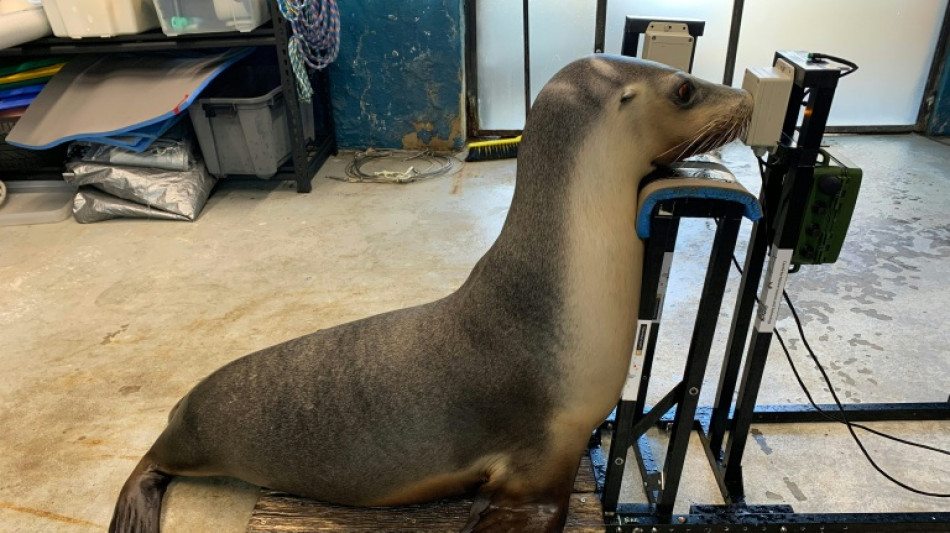
Seals and sea lions get hearing tested at Australia zoo / Photo: © Christine ERBE/AFP
Scientists in Australia trained sea lions and seals to respond to a hearing test for research into how the marine mammals are affected by human-made noise.
Keepers at Sydney's Taronga Zoo trained two sea lions and two fur seals to listen to sounds and press a paddle when they heard a tone.
They were rewarded with fish for the right answers.
"Before we can understand whether a noise is affecting an animal, we need to know whether it can hear that noise in the first place," Curtin University professor and lead researcher Christine Erbe said on Thursday.
"These hearing tests give us that baseline and allow us to start asking how noises from ships, boats, aircraft and coastal construction might affect seals and sea lions."
The peer-reviewed study found the pinnipeds were most sensitive to sounds around 3.2 kilohertz.
"The research is particularly important for the endangered Australian sea lion, which has an estimated population of only about 12,000 animals and relies on hearing for communication, finding food, navigation and detecting threats," Erbe said.
Noise pollution is known to have a major negative impact on wildlife.
A study released in February found it was affecting bird behaviour across the globe, disrupting everything from courtship songs to their ability to find food and avoid predators.
Taronga Conservation Society Australia Behavioural Biologist Benjamin Pitcher said the research on sea lions and seals would have real world impact.
"The findings could help inform environmental impact assessments and noise management as shipping, coastal development and offshore industries expand," he said.
"We now know what these animals can hear in air. The next step is to understand how noise affects them underwater, and when it begins to interfere with their behaviour or hearing."
F.Herzog--BP