Trump says Iran deal 'very possible', but threatens strikes if not
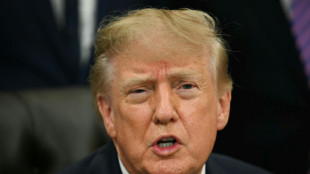
US President Donald Trump said Wednesday he believed a deal with Iran was "very possible", but threatened to resume his bombardment of the country if negotiations fell apart.
Despite the US leader's optimism, Iran has yet to respond to a new US proposal, with its chief negotiator warning that Washington was seeking to force the Islamic republic's "surrender".
Positive signs that the foes could return to the table after weeks of deadlock grew after Trump halted a short-lived military operation to reopen the Strait of Hormuz, citing hopes for a deal.
Trump said on social media Wednesday that if "Iran agrees to give what has been agreed to", the war would be over, but if not, the bombing would resume "at a much higher level and intensity".
"We've had very good talks over the last 24 hours, and it's very possible that we'll make a deal," Trump later told reporters in the Oval Office.
Iranian foreign ministry spokesman Esmaeil Baqaei told local media that the "US plan and proposal are still under review", and that Tehran would convey its position to mediator Pakistan "after finalising its views".
Mohammad Bagher Ghalibaf, Iran's parliament speaker who has taken the lead in negotiations with the US, warned Wednesday that Washington "is seeking, through a naval blockade, economic pressure and media manipulation, to destroy the country's cohesion in order to force us to surrender".
- 'Durable peace' -
The US military said a US Navy warplane on Wednesday fired on and disabled the rudder of an oil tanker that tried to break Washington's blockade of Iranian ports.
Trump had said the day before that the US blockade would remain in place as Tehran kept up its own chokehold on the Strait of Hormuz.
But citing progress toward a deal, he said a new effort to reopen the vital trade route "will be paused for a short period of time to see whether or not the Agreement can be finalized".
Pakistani Prime Minister Shehbaz Sharif, a key figure in an initial round of talks held in Islamabad last month, was optimistic on the prospects for a deal.
"We are very hopeful that the current momentum will lead to a lasting agreement that secures durable peace and stability for the region and beyond," he said on X.
US news outlet Axios, citing two US officials, reported that both sides were close to agreeing on a one-page memorandum of understanding to end the war and set a framework for more detailed nuclear negotiations.
In his remarks to PBS, Trump insisted Iran would hand over its enriched uranium to the US, without explaining how this key point of contention would be resolved.
- Oil tumbles -
Iran's top diplomat Abbas Araghchi met his Chinese counterpart Wang Yi in Beijing on Wednesday, later telling Iranian state TV that the pair reviewed "the negotiations that are currently underway" to end the war.
He also said on X that Iran "looks forward to" Beijing "supporting the establishment of a new post-war regional framework that can balance development and security".
After the talks, Wang called for an end to hostilities and for both countries to reopen the Strait of Hormuz "as soon as possible", his ministry said.
Trump's more conciliatory tone came hours after US Secretary of State Marco Rubio said the US had completed its offensive operations against Iran.
Investors welcomed those remarks and the decision to pause the US effort to guide ships through the strait, with international oil benchmark Brent and West Texas Intermediate both tumbling below $100 a barrel as stock markets rallied.
But in Tehran one resident told Paris-based AFP journalists that the prospect of any deal with the current government was "terrifying".
"We've gone through so much hardship and suffering, and no achievements for people?" said translator Azadeh, 43. "I honestly just hope they finish this regime."
The standoff in the vital waterway had led to claims of attacks by both sides earlier this week, in the sharpest escalation since a truce took effect on April 8.
Washington and Gulf countries have drafted a UN Security Council resolution demanding Tehran halt attacks, disclose mine locations and end efforts to charge tolls in the strait, Rubio said, with a vote expected in the coming days.
- 'High alert' -
On the war's Lebanese front, Israel struck Beirut's southern suburbs on Wednesday -- the first on the area in nearly a month.
The attack killed a senior Hezbollah commander from the group's elite force, a source close to the Iran-backed group told AFP.
Israel also struck at least two villages in southern Lebanon on Wednesday, including one near a 12-century Crusader-era castle, according to AFP images.
The Lebanese health ministry said an Israeli strike killed four people in the eastern Bekaa valley.
Israel's army chief Lieutenant General Eyal Zamir visited troops in southern Lebanon on Wednesday, vowing to "seize every opportunity to deepen the dismantling of Hezbollah".
He added that the military was also "on high alert to return to a powerful and broad operation" against Iran if need be.
burs-smw/amj/jsa
O.Vogel--BP