Venezuela frees 131 prisoners amid post-Maduro transition talks / Photo: © AFP
Venezuela on Friday freed another 131 people considered to be political prisoners, in a sign of progress in talks to reconcile the nation following Nicolas Maduro's removal by US forces.
The 131 people had been granted "alternative measures from incarceration," under the "Program for Peace and Democratic Coexistence," the country's interim government said.
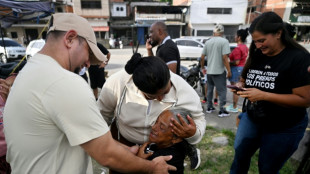
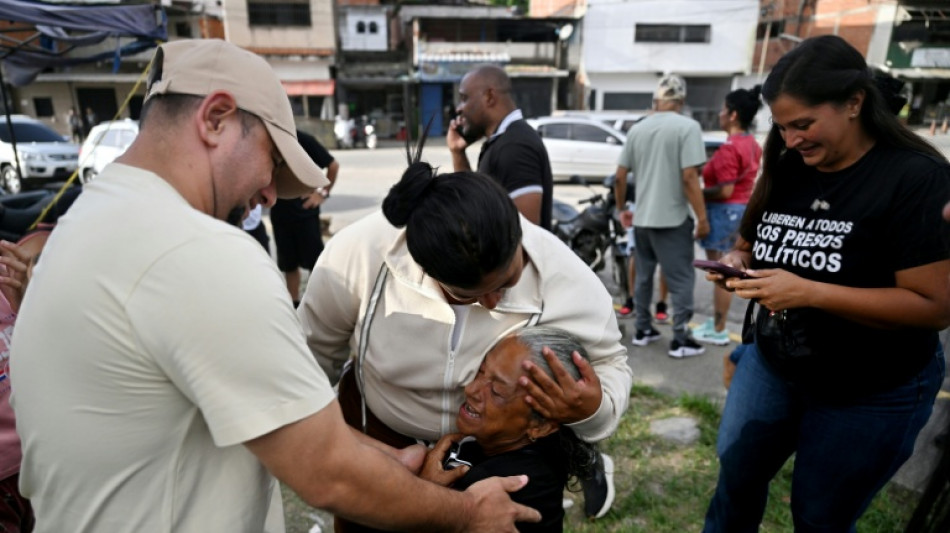
Outside the El Rodeo I prison in Guatire, 50 kilometers (31 miles) east of the capital Caracas, AFP reporters witnessed scenes of tearful joy as several former prisoners reunited with their families.
US Secretary of State Marco Rubio said the recent release of over 130 political prisoners in Venezuela is "a crucial step for the nation's reconciliation process."
"Since January 3rd, 1,046 Venezuelans have been released," he said.
The Foro Penal rights group, which advocates for the release of alleged political prisoners, announced that six women had been freed, including one accused of participating in an assassination plot against Maduro.
It said later that the release of "at least 40 political prisoners" had been confirmed.
The move comes a day after opposition figure Dinorah Figuera vowed to fight for the release of political prisoners in formal talks she is leading with the interim government.
The first round of the US-brokered talks kicked off last week and wrapped up on Wednesday.
A joint statement issued by both sides afterward said they had agreed to work on retrieving frozen funds from overseas to help with recovery from the devastating June earthquakes which killed over 6,300 people, as well as to work on reforming Venezuela's judiciary.
It did not address the issue of political prisoners.
Maduro, who had led Venezuela since 2013 with an increasingly authoritarian bent, was widely accused of arresting political opponents and other activists, often on trumped-up charges of coup plotting.
In the weeks after Maduro was seized by US forces in early January, the interim government -- led by his deputy Delcy Rodriguez and under deep pressure from Washington -- allowed hundreds of prisoners to be freed.
Rodriguez also pushed through a historic amnesty law in February.
As of Monday, Foro Penal said 391 political prisoners remained behind bars.
Figuera, in a statement Friday on X, said that "not everyone has been released, and they all deserve full freedom."
"Let's continue to demand this tirelessly until every citizen is reunited with their family."
- Assassination plot -
Among those who gained their freedom was Emirlendris Benitez, Foro Penal director Alfredo Romero said on X.
Benitez was among dozens of people arrested after an incident in 2018, in which two drones packed with explosives flew towards then-president Maduro as he addressed a military parade in Caracas.
The drones blew up, injuring seven soldiers.
Benitez, then four months pregnant, was arrested alongside her partner Yolmer Escalona. The couple denied involvement in the plot, but were both eventually sentenced to 30 years in prison.
Human rights groups have said that Benitez was tortured during her detention, leading to a miscarriage and partial paralysis.
The reconciliation talks between the government and opposition are being led by Figuera and interim president Rodriguez's brother, National Assembly chief Jorge Rodriguez.
Notably absent from the table is exiled opposition leader and Nobel Peace Prize laureate Maria Corina Machado, who has said she will not stand in the way of the process.
Many Venezuelans are hopeful that the transition talks will lead to democratic elections, after Maduro's wins in 2018 and 2024 polls were rejected by the opposition and many foreign nations as fraudulent.
P.Kuhn--BP