US envoys hold 'important' talks in first trip to Kyiv / Photo: © AFP
US envoy Steve Witkoff said he and fellow emissary Jared Kushner held "important" talks Sunday with Ukrainian President Volodymyr Zelensky on ending the war with Russia -- but offered no sign of a breakthrough.
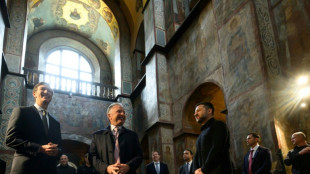
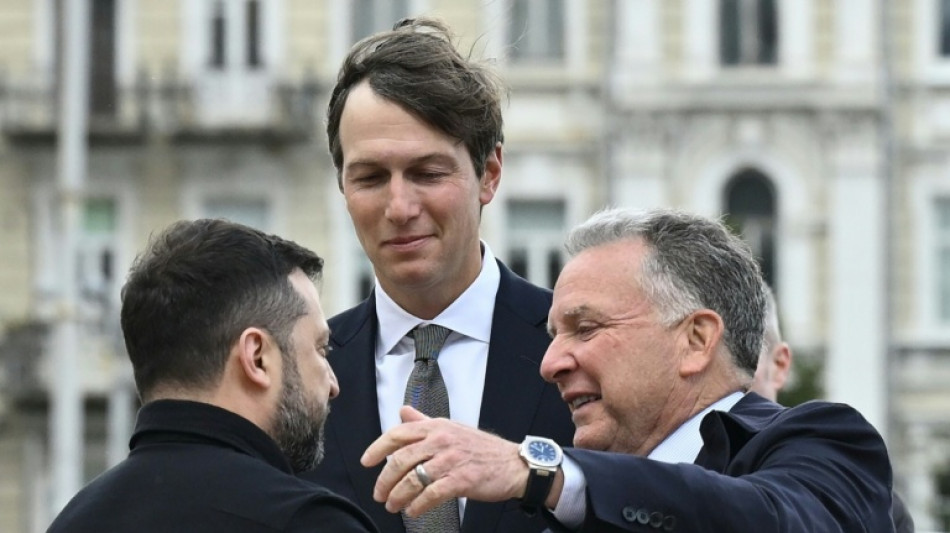
The envoys met with the Ukrainian leader on their first trip to Kyiv, a day after meeting with Russian President Vladimir Putin in the Kremlin.
Witkoff, President Donald Trump's business ally, and Kushner, Trump's son-in-law, have been to Moscow several times, but had never held talks in the Ukrainian capital -- hit by deadly Russian strikes for more than four years.
"We've had a very meaningful discussion, substantive, important, and we are very encouraged and we look forward to continuing this as long as it takes," Witkoff said after the talks.
"Hopefully this trip has come out with some new ways to advance forward. I think we've learned a lot from the trip," Kushner said after the meeting with Zelensky.
Witkoff and Kushner travelled to the region hoping to revive the Trump administration's push for peace in Europe's worst conflict since World War II, after a summer of escalation.
Another round of talks in the presence of British, French and German representatives was still ongoing.
"We are grateful that the Europeans are with us today and that we are in such a coalition of countries," Zelensky said.
"Here we are all on the same side."
- 'Peace Express' -
Like all visiting officials, the American delegation arrived by train, with "Peace Express" written on the platform at Kyiv Central Station.
Zelensky said Kyiv had "prepared everything to make our airports operational", but that Russian strikes made arriving by plane impossible.
Ukrainian airspace has been closed since Russia launched its invasion in 2022.
Russia and Ukraine have vowed not to strike each other's capitals during the US envoys' trip.
- 'Substantive plans' -
Moscow's invasion of Ukraine has killed hundreds of thousands of people and displaced millions.
A White House official said in a statement to AFP that in Moscow the envoys had "discussed substantive plans which will be announced in the coming weeks".
The Kremlin said the Americans "put forward a number of ideas on possible routes to a settlement", but did not elaborate.
Putin has repeatedly said Moscow intends to seize the rest of eastern Ukraine, and Russia increased deadly strikes this summer.
Since Putin launched the invasion in February 2022, the war has dragged on with no end in sight.
In Kyiv, many welcomed the fact the Americans even made it to Ukraine, but few believed in a breakthrough.
Nataliia Lipekh, 67, said it was "absolutely necessary (for them) to be here" and to see that "our land is already soaked with this blood and that we need some help."
"At the moment, I have no grounds for hope," said 29-year-old Yaroslav, saying he had seen "far too many of these negotiation processes".
- 'Idea for peace' -
Putin on Saturday told the US envoys that Moscow would ensure their safety in Kyiv.
Just days ago, Russia struck the headquarters of the SBU security building in central Kyiv.
Trump has said his envoys were bringing a "proposal" to end the fighting.
"We have an idea for peace," he said, without elaborating.
Undercutting Trump's vow to end the war quickly, US peace efforts have stalled, in part because of Washington's war with Iran.
- 'Deceived us' -
Despite the ceasefire pledges for the capital cities, fighting continued elsewhere.
Ukraine's air force said Russia had attacked overnight with 108 drones and missiles, while Moscow said it had shot down 258 drones.
Ukraine said Saturday that 10 people were killed by Russian strikes, including an 11-year-old boy.
With the war in its fifth year and thousands dead, peace seemed out of reach for most.
Yulia, a 41-year-old who came from a town now occupied by Russia and worked as a cleaner in Kyiv, said it was a "positive step" the Americans were in Kyiv.
"But taking our opponent into account... I can't put my hopes on this, because for thousands of years they have deceived us with their empire and imperial habits," she said, adding:
"We want to believe in it, but it's very difficult."
C.Stein--BP