France budget debate faces rocky start as Socialists vow to fight / Photo: © AFP
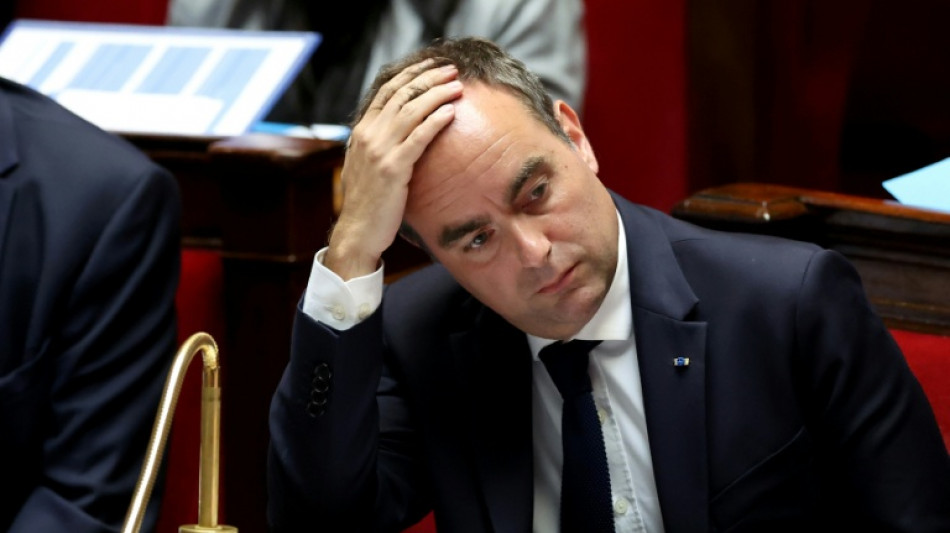
Prime Minister Sebastien Lecornu of France sought Tuesday to dissuade the Socialist Party from derailing the 2027 budget debate in parliament, as the government tries to reassure anxious debt markets while containing public anger over spending cuts.
The lower house of parliament, the National Assembly, is due to begin examining the revenue section of the budget on Tuesday evening.
The debate comes against a volatile political backdrop, with weeks of school protests over education conditions and the eurosceptic far-right National Rally (RN) party eyeing power in next spring's presidential election.
Lecornu's government wants to reduce the budget deficit in the eurozone's second-largest economy to five percent of GDP through 43 billion euros ($48 billion) in spending cuts and other measures.
Opposition parties including the Socialists, who helped secure passage of this year's budget, have slammed the government's plan for measures that include slashing healthcare spending and capping pensions.
The Socialists plan to table a motion rejecting the budget at the outset of the debate, likely on Tuesday evening.
While the rest of the left plans to back the motion, which concerns the revenue side of the budget, the RN announced Tuesday that it would vote against, effectively dooming its chances of success.
Lecornu unsuccessfully urged the Socialists to withdraw the motion, which could halt debate before it begins.
In a letter to Socialist leaders, he called for compromise and argued that refusing to engage in budget discussions would be "the worst signal the National Assembly could send".
The Socialists rejected the offer.
"The prime minister is making fun of us," said Arthur Delaporte, a party spokesman.
The far right said it would not back the motion.
"We want a debate, and we will not give the Macron government the gift of avoiding a confrontation in the chamber," Jean-Philippe Tanguy, a senior National Rally lawmaker, told reporters.
- 'Boycott motion' -
Public Accounts Minister David Amiel called the planned move "a boycott motion".
"Interest rates are soaring today. Parliament cannot simply look the other way," he told broadcaster France 2. "We need a debate in the National Assembly."
French government bonds have become the bane of investors amid fears that officials are unwilling or unable to rein in spending that far outstrips revenue.
Mounting concerns over France's finances have fund managers demanding higher returns for lending to France, resulting in a surge in borrowing costs that could spiral into a full-blown debt crisis.
"Financial markets need to feel that, whatever happens, we'll ultimately end up at five percent," a government source said, referring to the deficit-to-GDP level.
Whether debate drags on for weeks or is cut short, the government has little prospect of securing passage of the budget through parliament under normal parliamentary procedures.
The government wants to almost halve its social security deficit next year, bringing it down to 12 billion to 13 billion euros.
Among other measures, it is proposing that annual revaluations of pensions above 1,260 euros a month no longer be fully indexed to inflation.
The plan has drawn criticism from across the political spectrum, spanning the hard left, the far right and the conservative Republicans.
Lacking a parliamentary majority, the government could once again use a constitutional power to ram the legislation through parliament without a vote, as it did last year.
A pensions overhaul that would have raised the retirement age from 62 to 64 sparked months of protests before Lecornu scrapped it last year, in order to secure support from the Socialists for the 2026 budget.
sac-far-as/ah/js
B.Schmid--BP