Brazil votes in tight election as Lula slams polling obstacles / Photo: © AFP
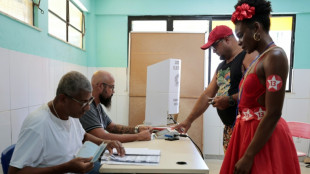
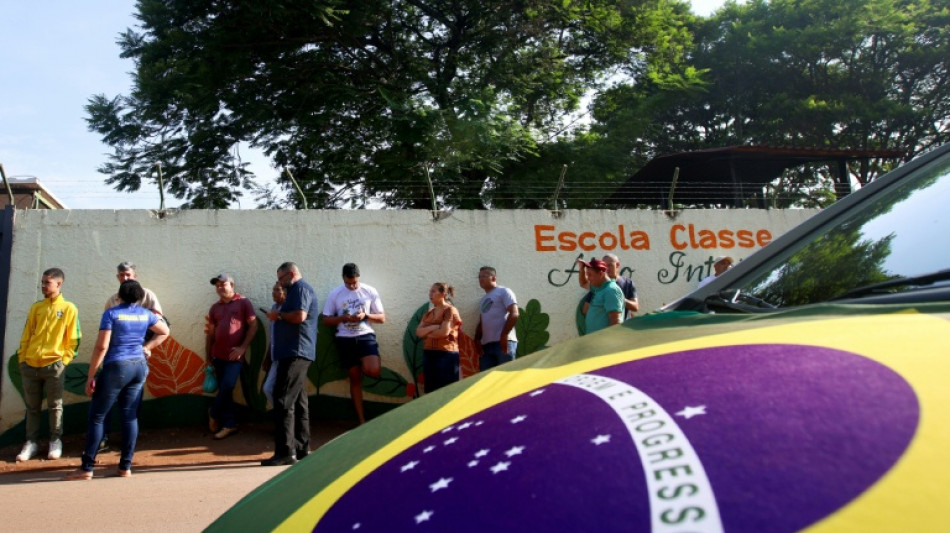
Brazil voted Sunday in a knife-edge election between right-wing senator Flavio Bolsonaro and leftist incumbent Luiz Inacio Lula da Silva, who called for voting hours to be extended over obstacles to public transport in some cities.
Lula, who turns 81 next week, is facing stiff competition from the son of jailed former president Jair Bolsonaro, who won the most first-round votes.
Final polls showed the pair neck-and-neck in Sunday's runoff, during which Lula blasted reduced bus services in Sao Paulo and several other cities as an attempt to block people from voting.
"We are asking the Supreme Court to extend the electoral process so that those who were effectively barred from voting, due to the dirty tactics of mayors, can still cast their votes," said Lula.
A regional electoral court ordered the arrest of Salvador's transport secretary for failing to offer free transport on election day, while local media reported that 75 buses had been prevented from leaving garages in the city.
- 'We are watching' -
Sunday's runoff will determine whether Brazil remains one of Latin America's few leftist nations or joins a regional swing to the right championed by US President Donald Trump.
Lula, who is seeking a fourth non-consecutive term, has pitched himself as a bulwark against US interference and democratic backsliding.
Trump, an ally of Flavio Bolsonaro's father, simply said "we are watching, yeah," when asked about Brazil's election on Sunday.
The 45-year-old senator has vowed to crack down on crime and slash government spending, while handing Brazil to "the Lord Jesus Christ."
"The time has come for real change," he declared after voting in Rio de Janeiro.
"This is about renewal, enough of the same old thing," 67-year-old retiree Eduardo Viana told AFP, adding that Lula "says he governs for the poor...just look, people can't even go to the supermarket."
Bolsonaro presents himself as more moderate than his firebrand father, who is serving a 27-year sentence for coup-plotting after his 2022 election loss.
After its first-round defeat, the left swung into action with massive rallies highlighting Jair Bolsonaro's chaotic handling of the Covid pandemic, devastation of the Amazon rainforest and cuts to public programs.
Deforestation of the world's largest rainforest has hit its lowest level in four decades under Lula.
Yet, as the El Nino weather phenomenon fueled fires across the Amazon in recent weeks, climate change barely featured in the campaign.
Lula, revered for social welfare programs that lifted millions out of poverty, made a dramatic comeback to office in 2022 elections after a corruption scandal saw him jailed for over 18 months.
The charges, annulled on procedural grounds, have continued to haunt him.
In his third term he has overseen a drop in inflation and unemployment, and lifted millions out of hunger, but voters complain about the cost of living and a sense of insecurity.
Lula's social policies became a point of tension as he expanded welfare programs during the campaign. Critics want the government to rein in spending.
"Even if people call it handouts, for us, they were an enormous help. Because anyone who has ever gone hungry knows not to take these programs for granted," said Walter dos Santos, 56, who lives in Lula's native northeastern Brazil, a bastion of support for the president.
- Weariness -
After his first-round blow, Lula revamped his social media strategy and even bought his first cellphone.
A fierce social media battle drew in Meta, parent company of WhatsApp, Facebook and Instagram, which Lula's campaign accused of favoring his opponent with "algorithmic manipulation."
Meta denied this but acknowledged that some of Lula's campaign ads had been mistakenly deactivated due to technical errors.
The bitterly divisive campaign alienated many voters, including doorman Joao Inacio Oliveira, who told AFP he would make a last-minute decision at the polling station.
"I don't know who I'm going to vote for," said Oliveira, 72. "I don't have any hope in the governments that come and go in Brazil."
Polling stations will close at 5:00 pm local time (2000 GMT), and results are expected within hours.
O.Vogel--BP