'No room for mistakes' scaling Everest in Venice documentary / Photo: © AFP
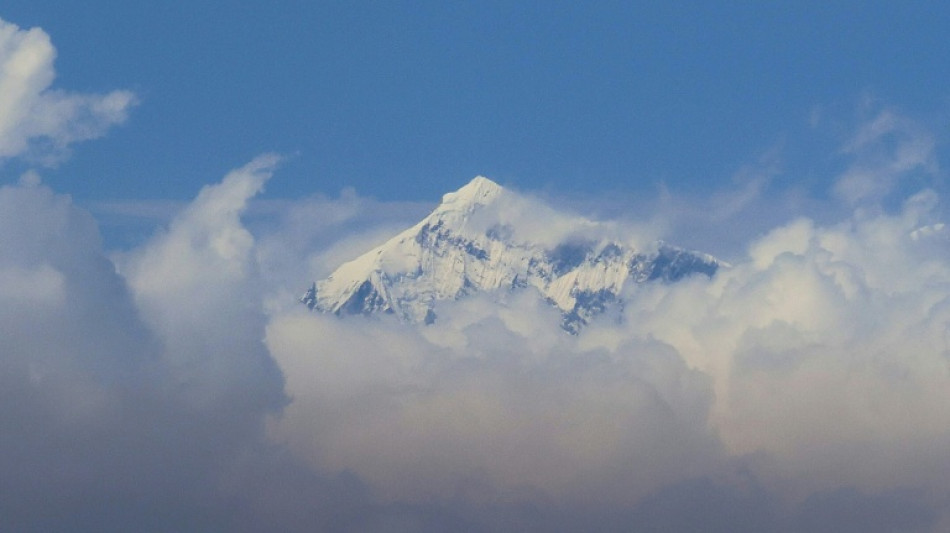
Mount Everest's most dangerous route and the elite ski mountaineers driven to climb it and ski down are the protagonists of a new documentary at the Venice film festival from the Oscar-winning team behind "Free Solo".
"Everest: The Other Side" follows world class athletes Jim Morrison and Hilaree Nelson as they attempt a near-impossible expedition to scale the north face of Everest on foot and return on skis, something that had never before been attempted.
"Why can't you guys pick something less epic and insane?" asks one of the directors, Jimmy Chin, himself a top mountaineer who climbed with Nelson for two decades, at the start of the film.
Chin directed the documentary alongside his wife Elizabeth Chai Vasarhelyi, a follow-up to their "Free Solo", about one man's attempt to scale Yosemite's near-vertical El Capitan granite monolith without the use of a rope.
The film won the best documentary prize at the 2018 Academy Awards.
Playing out of competition in Venice, "Everest: The Other Side" similarly explores courage, drive -- and enormous risk.
Alternating between exhilarating, terrifying and heartbreaking, the film is about "exploring these questions of what compels people to... dream these dreams," Chin told a press conference Thursday.
Nelson died in an avalanche in September 2022 while skiing down the Manaslu mountain in Nepal with Morrison, with the fatal accident captured in the documentary.
Providing the emotional backdrop of much of the film are Morrison's attempts to live through his grief and carry out the dream he had shared with his partner Nelson as a tribute.
"This film in its heart really looks at this question through Jim's eyes of how you can move through grief. How do you learn to live with grief? How does that grief inform a life of intention?" said Chai Vasarhelyi.
- 'Experience of awe' -
The documentary pushes the boundaries of the craft of cinema, requiring great demands to film in harsh conditions on the dangerous mountain where "there's no room for mistakes," Chin told journalists.
"We can't kind of overstate that what you see on the screen is a great achievement of mountaineering, but also of our craft in terms of how do you actually, possibly, film something like this?" he asked.
An inordinate amount of risk assessment and logistics went into the film, where Morrison, the sherpa team and crew climbed from 20,000 feet to about 29,000 feet, directors said.
"The team was made up of world class athletes and climbers who could also shoot," Chin explained.
The many variables to be assessed included "weather, conditions, wind, temperature, gradients, all the things that you think about as a climber."
"And then you have to add the filming on top of it," he said.
Being on the summit of Mount Everest alongside his team was "pretty extraordinary", Chin said, adding that he hoped to "do justice" to the grandeur of the mountain.
"I think we return to the mountains again and again because we find something there that moves us, that we find meaning in," he said.
"The sense of presence that we feel, the awe, the experience of awe -- which is something that I think all humans appreciate."
L.Fischer--BP